Drone/UAV Specialist
Technology & Design
Flies drones to capture aerial imagery, topographic data, and progress documentation for a project, one of the few construction roles with a hard federal license requirement.
What is a Drone/UAV Specialist?
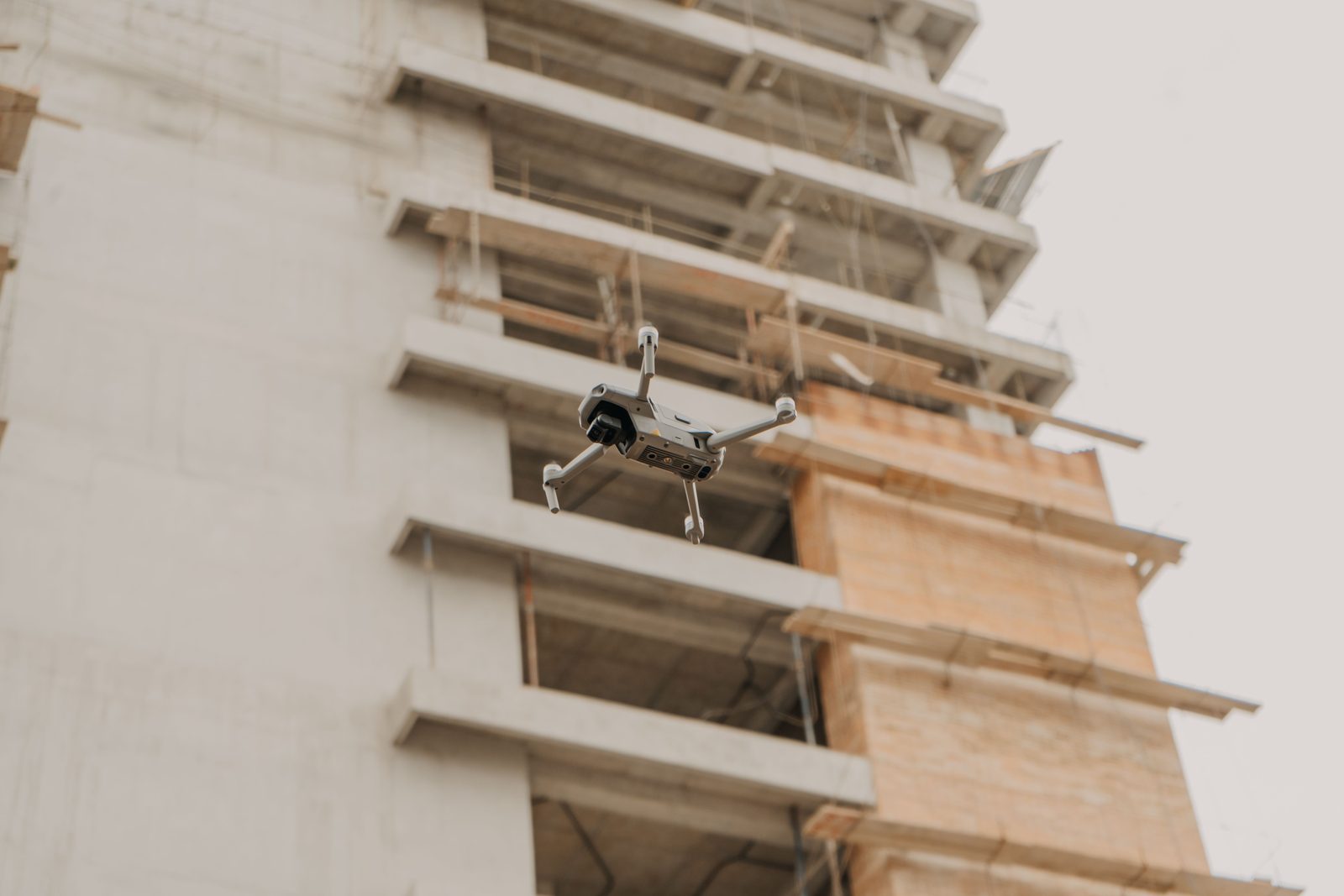
A Drone/UAV Specialist operates unmanned aircraft to capture aerial photos, video, and survey-grade topographic data for a construction project, site progress documentation, volumetric measurements of earthwork, and increasingly data that feeds directly into a BIM model. Unlike most roles on this site, this one has a clear-cut federal requirement: the FAA requires anyone flying a drone for commercial purposes in the United States, which covers virtually all construction use, to hold a Part 107 Remote Pilot Certificate, earned by passing the FAA's aeronautical knowledge test. There's no ambiguity or workaround here; flying commercially without it is a real regulatory violation.
What they do
- Plan and fly drone missions to capture site progress photos and video
- Capture aerial data used to calculate earthwork volumes and verify grading
- Process captured imagery into orthomosaic maps and 3D point clouds
- Coordinate flights with site safety requirements and, near airports, FAA airspace authorization
- Deliver processed data to project teams, estimators, or the BIM/VDC team for use in the model
- Maintain and inspect drone equipment and keep required flight logs
A typical day
- 8:00 AMCheck weather and airspace conditions before planning the day's flight
- 9:00 AMFly a site progress mission, capturing imagery of the week's earthwork
- 11:00 AMProcess captured imagery into an updated site orthomosaic
- 1:00 PMDeliver volumetric earthwork data to the estimating team
- 3:00 PMInspect and maintain drone equipment, and log the day's flight hours
Skills
Software
Pay expectations
Pay by experience, nationally
as of May 2025
Source: U.S. Bureau of Labor Statistics, Occupational Employment and Wage Statistics (OEWS), Surveying and Mapping Technicians (SOC 17-3031), national data — no BLS code exists specifically for drone/UAV operation; this is the closest classification given how much of the role's field data-collection work overlaps with ground survey crews
Reviewed May 2025. Pay reflects the national wage distribution for this occupation, not a promise for any one job: entry level is the lower part of that range, 5 years in sits around the national median, and 10 years in is the upper part, since pay isn't actually tracked by years on the job. Real pay varies a lot by state, metro area, union status, and employer — scale these up or down for your market. These figures are base pay only: overtime, shift differentials, and per-project bonuses are standard across most construction trades and routinely push real earnings above what's shown here.
Education
- Required:
- High school diploma or equivalent, plus an FAA Part 107 Remote Pilot Certificate, legally required to fly a drone commercially in the U.S., including for construction site work; there is no substitute or workaround for this one
- Preferred:
- Background in surveying, photography, or GIS
- Not necessary:
- A four-year degree; many drone specialists come from a surveying, photography, or field construction background and add the Part 107 certificate on top
Career progression
- 1.Drone Pilot / Operator
- 2.Drone/UAV Specialist
- 3.UAV Program Manager (for companies running fleets across multiple projects)
Who hires for this role
Explore next