Mason
Field & Trades
Builds with brick, block, and stone, work that's visible on the finished building in a way most structural trades aren't.
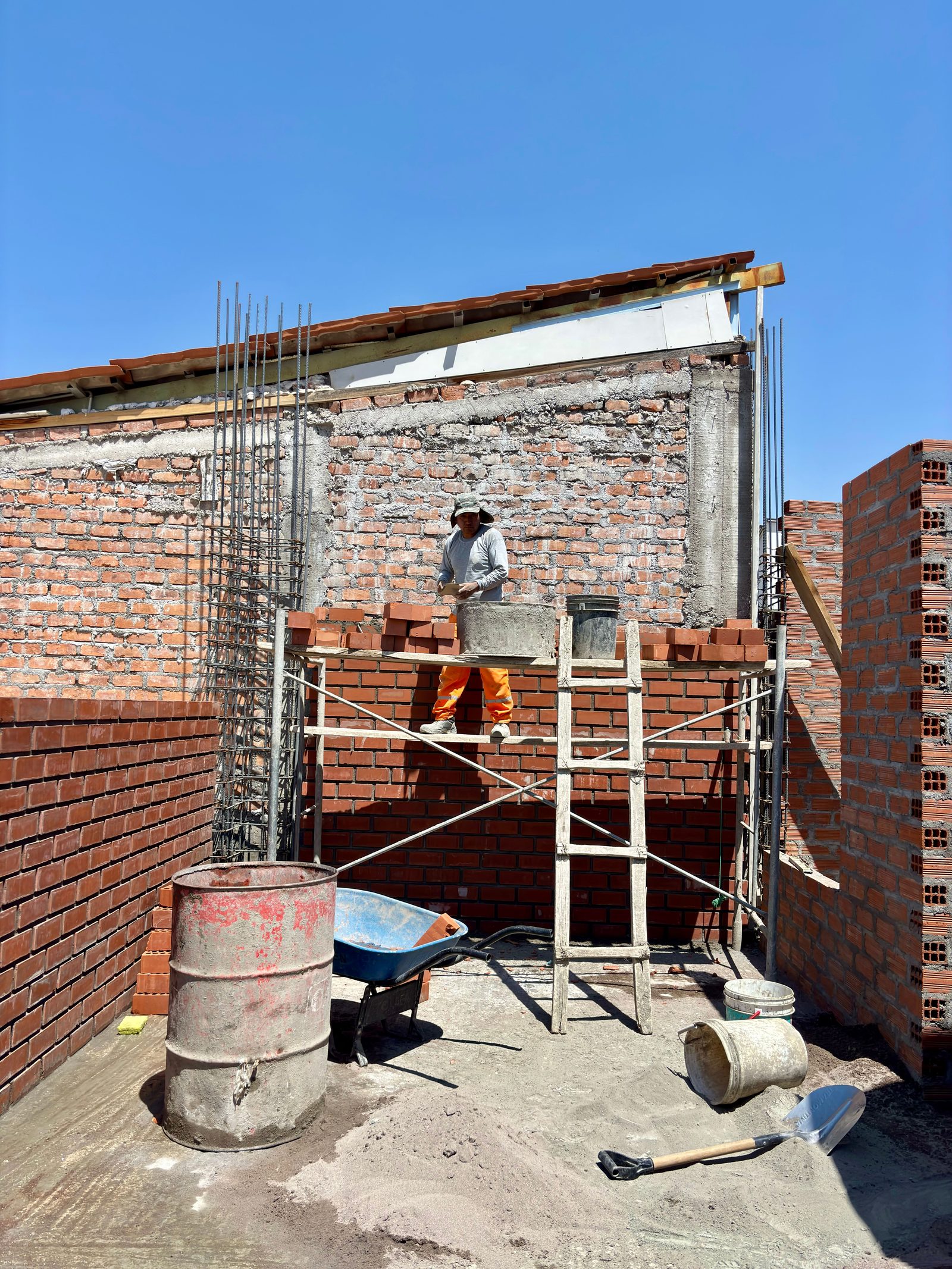
What is a Mason?
A Mason builds and repairs structures using brick, concrete masonry units (CMU), stone, and mortar, exterior brick veneer, structural CMU walls, and decorative stonework. Unlike electrical or plumbing work, masonry generally isn't a separately state-licensed trade in most places, so the path into it runs through apprenticeship and on-the-job skill-building rather than a licensing exam.
What they do
- Lay brick, block, and stone according to drawings and specifications
- Mix and apply mortar, matching the correct type and ratio for the material and application
- Read drawings and details to plan coursing, bond patterns, and control joint locations
- Build and remove scaffolding as work progresses up a wall
- Cut and fit masonry units around openings, corners, and other details
- Tuckpoint and repair existing masonry as part of restoration work
A typical day
- 6:30 AMReview the day's wall section and check mortar and material staging
- 7:00 AMLay brick veneer on the level currently under construction
- 10:30 AMCut and fit brick around a window opening per the detail drawings
- 1:00 PMBuild scaffolding to reach the next lift of the wall
- 3:30 PMClean tools and protect the day's completed work before weather exposure
Skills
Software
Pay expectations
Pay by experience, nationally
as of May 2025
Source: U.S. Bureau of Labor Statistics, Occupational Employment and Wage Statistics (OEWS), Brickmasons and Blockmasons (SOC 47-2021), national data
Reviewed May 2025. Pay reflects the national wage distribution for this occupation, not a promise for any one job: entry level is the lower part of that range, 5 years in sits around the national median, and 10 years in is the upper part, since pay isn't actually tracked by years on the job. Real pay varies a lot by state, metro area, union status, and employer — scale these up or down for your market. These figures are base pay only: overtime, shift differentials, and per-project bonuses are standard across most construction trades and routinely push real earnings above what's shown here.
What this chart doesn't capture
A masonry company's pay isn't capped at an employee's wage — it's capped by how many jobs you can bid, staff, and finish well in a season.
These figures are wage-and-salary pay only — BLS excludes the self-employed and business owners entirely, and no government source publishes a reliable owner-income figure for masonry contractors. Most masonry work is bid by the job, so income tracks project pipeline and crew efficiency more than a steady rate. Worth researching your own market's bid volume before assuming ownership beats steady employee pay.
Education
- Required:
- High school diploma or equivalent, then a registered apprenticeship (typically 3-4 years of paid on-the-job training plus classroom hours), since masonry isn't a separately state-licensed trade in most places the way electrical or plumbing work is
- Helpful:
- OSHA 10 or 30 certification (not a nationwide legal requirement, though several states, including New York, Massachusetts, Connecticut, Nevada, Missouri, and Rhode Island, legally require it for workers on public construction projects) and scaffold-specific safety training
- Not necessary:
- A four-year college degree, since the apprenticeship-to-journeyman route is the standard path
Career progression
- 1.Apprentice Mason
- 2.Journeyman Mason
- 3.Mason Foreman
- 4.Masonry Contractor (running your own crew/business)
Who hires for this role
Explore next