Superintendent
Project & Operations
Runs the jobsite day-to-day so the schedule, the safety, and the actual sequence of work all hold together.
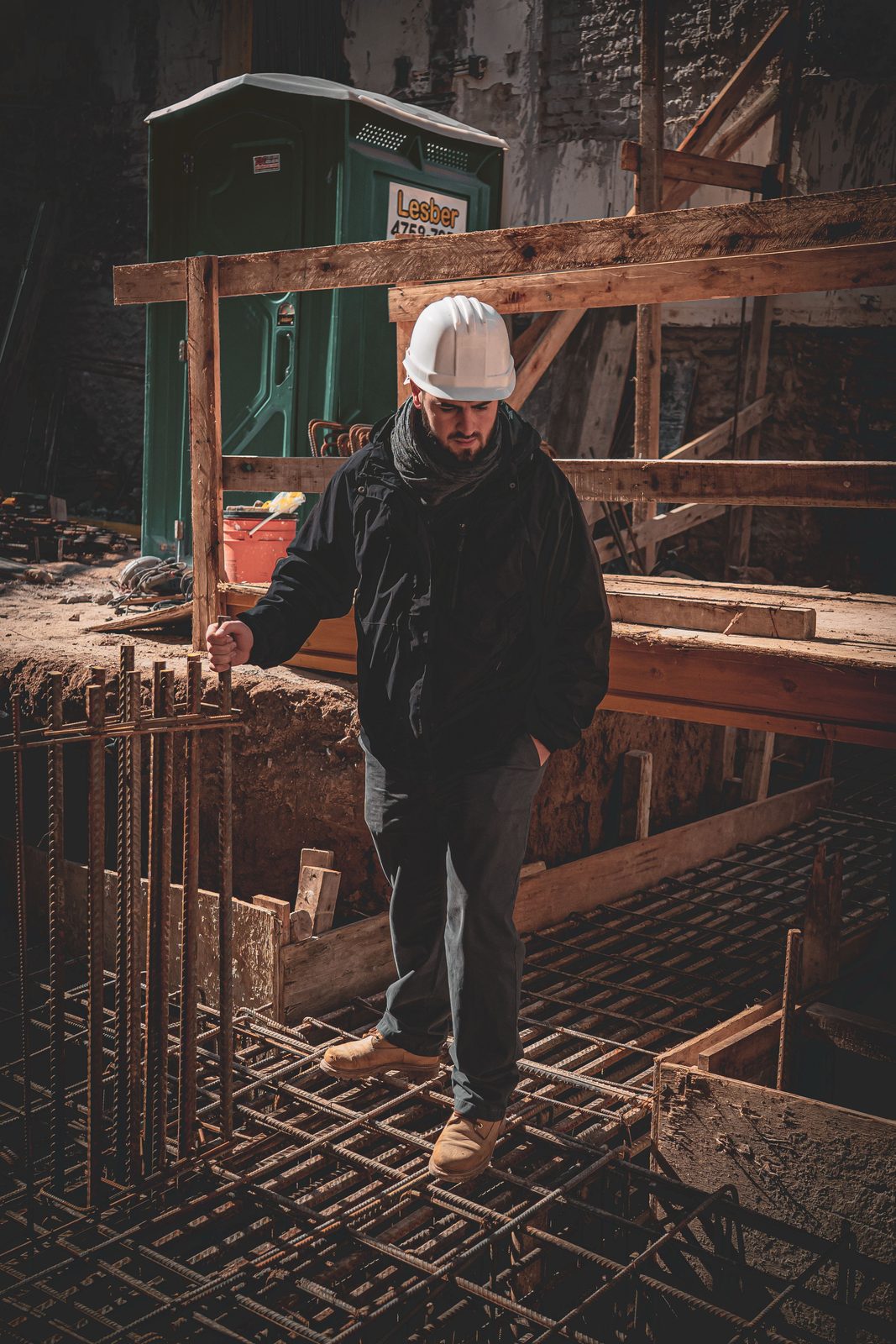
What is a Superintendent?
A Superintendent ("super") is the general contractor's senior person physically on site every day, responsible for the means and methods of construction: which trade works where, in what order, and whether what just got built actually matches the drawings before it gets covered up. Where a Project Manager owns the budget and the paperwork, the superintendent owns the field: safety, sequencing, and quality control on the ground.
What they do
- Walk the site daily to check progress against the schedule and catch problems early
- Coordinate the day-to-day sequencing of subcontractors so trades aren't fighting over the same space
- Enforce jobsite safety rules and run daily safety briefings
- Inspect completed work against the drawings before it's covered by the next trade
- File RFIs from the field when the drawings don't match what's actually buildable
- Escalate anything that will affect cost or schedule to the project manager, usually as the first step toward a change order
A typical day
- 6:30 AMWalk the site before crews arrive, checking yesterday's work and today's material staging
- 7:00 AMRun the morning safety briefing and hand out the day's work assignments to each trade
- 9:00 AMResolve a sequencing conflict between two trades scheduled for the same space; one gets moved
- 12:00 PMInspect framing before the drywall crew closes up a wall, catch a dimension issue, file an RFI
- 3:00 PMUpdate the project manager on progress and flag a schedule risk from a delayed material delivery
Skills
Software
Pay expectations
Pay by experience, nationally
as of May 2025
Source: U.S. Bureau of Labor Statistics, Occupational Employment and Wage Statistics (OEWS), Construction Managers (SOC 11-9021), national data — entry/5-year/10-year mapped to the upper half of this occupation's wage distribution (25th-90th percentile); BLS doesn't track assistant-level titles separately, see the Assistant Project Manager / Assistant Superintendent pages for the lower-half mapping of the same distribution
Reviewed May 2025. Pay reflects the national wage distribution for this occupation, not a promise for any one job: entry level is the lower part of that range, 5 years in sits around the national median, and 10 years in is the upper part, since pay isn't actually tracked by years on the job. Real pay varies a lot by state, metro area, union status, and employer — scale these up or down for your market. These figures are base pay only: overtime, shift differentials, and per-project bonuses are standard across most construction trades and routinely push real earnings above what's shown here.
Education
- Required:
- High school diploma or equivalent. No OSHA certification is legally mandated nationwide for this role, but OSHA 30 becomes legally required for a construction supervisor on a public project in a state that mandates it (including New York, Massachusetts, Connecticut, Nevada, Missouri, and Rhode Island); most employers expect it as standard practice everywhere else too
- Helpful:
- A construction management degree helps but is far from universal in this role
- Not necessary:
- A four-year degree; most superintendents are promoted up through the trades (starting as a tradesperson or foreman) rather than hired straight out of school
Career progression
- 1.Foreman
- 2.Assistant Superintendent
- 3.Superintendent
- 4.Senior or General Superintendent
- 5.Director of Field Operations
Who hires for this role
Explore next