MEP Engineer
Technology & Design
Designs the mechanical, electrical, and plumbing systems that make a building livable, work behind three of the site's most concept-dense trades with no design-side career representing any of them until now.
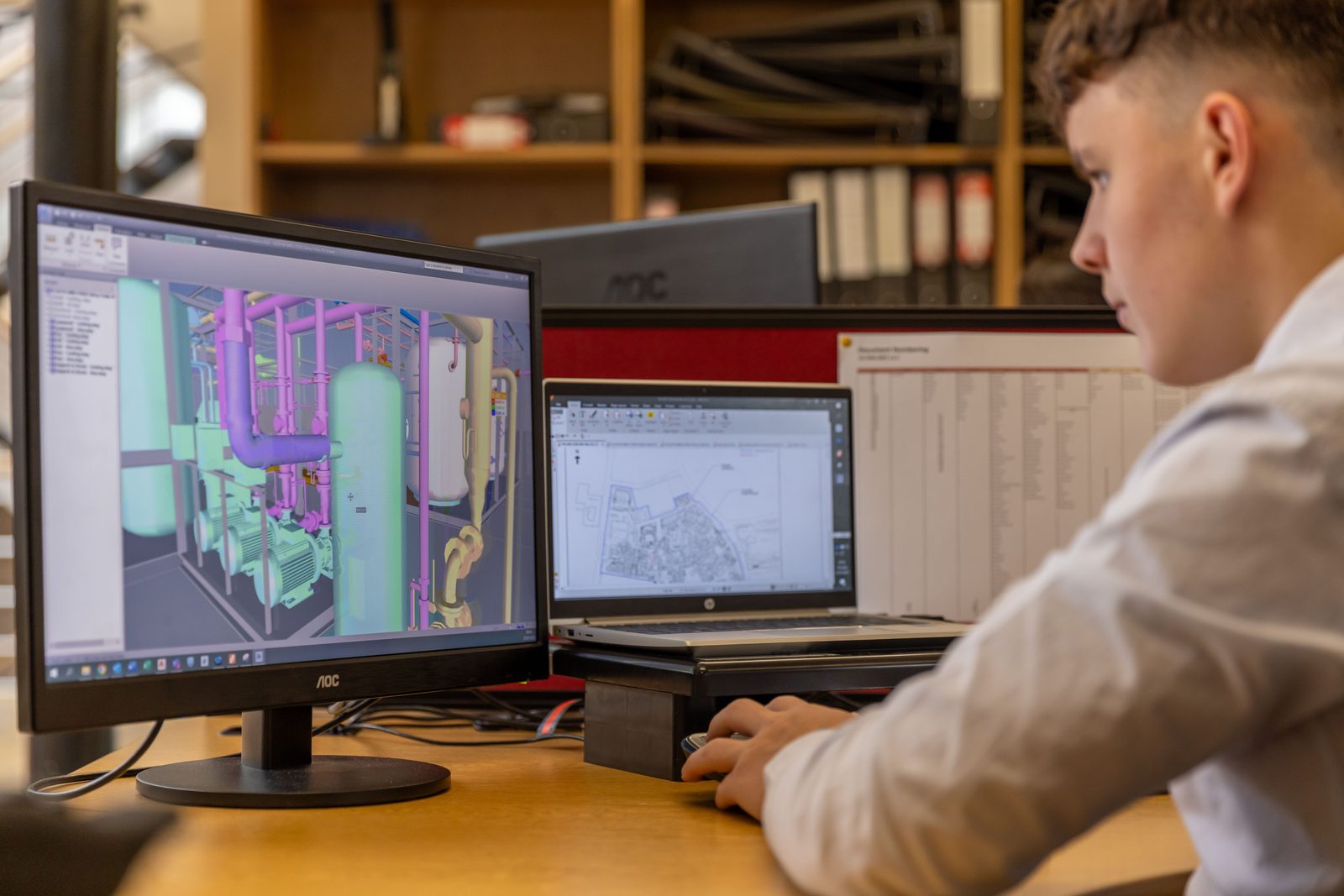
What is a MEP Engineer?
An MEP Engineer designs the mechanical (HVAC), electrical, and plumbing systems inside a building, sizing equipment, laying out distribution, and producing the drawings that HVAC Technicians, Electricians, Plumbers, Sheet Metal Workers, and Pipefitters actually build from. Some MEP engineers specialize in just one discipline (mechanical, electrical, or plumbing), while others work across all three, especially at smaller firms. Like civil and structural engineering, it's a licensed profession, and coordinating three interdependent systems in the same limited ceiling space is a big part of the job.
What they do
- Design HVAC systems, sizing equipment and laying out ductwork and piping
- Design electrical distribution systems, from service entrance to branch circuits
- Design plumbing systems, from domestic water supply to sanitary and storm drainage
- Produce MEP drawings and specifications, and coordinate them against each other and the structural and architectural drawings
- Review shop drawings and submittals from mechanical, electrical, and plumbing subcontractors
- Respond to RFIs and field coordination issues during construction
A typical day
- 8:00 AMReview a clash detection report flagging a conflict between ductwork and a structural beam
- 9:30 AMSize HVAC equipment for a building addition based on updated load calculations
- 11:30 AMReview electrical panel schedules and circuit submittals from the electrical subcontractor
- 1:30 PMCoordinate plumbing riser locations with the structural engineer's floor plan
- 3:00 PMRespond to an RFI about a mechanical room clearance issue discovered in the field
Skills
Software
Pay expectations
Pay by experience, nationally
as of May 2025
Source: U.S. Bureau of Labor Statistics, Occupational Employment and Wage Statistics (OEWS), Mechanical Engineers (SOC 17-2141), national data — the closest single BLS classification for a role that spans mechanical, electrical, and plumbing design; HVAC/mechanical design makes up the bulk of most MEP scopes, and BLS has no combined or separate code for the electrical and plumbing design portions
Reviewed May 2025. Pay reflects the national wage distribution for this occupation, not a promise for any one job: entry level is the lower part of that range, 5 years in sits around the national median, and 10 years in is the upper part, since pay isn't actually tracked by years on the job. Real pay varies a lot by state, metro area, union status, and employer — scale these up or down for your market. These figures are base pay only: overtime, shift differentials, and per-project bonuses are standard across most construction trades and routinely push real earnings above what's shown here.
What this chart doesn't capture
Making Principal at an MEP firm ties your income to the firm's own project fees across mechanical, electrical, and plumbing design — real upside, but tied to the same construction-cycle swings as the trades whose systems your firm designs.
These figures are wage-and-salary pay only — the Bureau of Labor Statistics excludes principals' and partners' equity distributions from this survey entirely, since that income is a share of the firm's fee revenue, not a wage. MEP firm ownership stakes vary by firm size, which systems the firm specializes in, and how much repeat design-build work a principal brings in, and no single published figure captures it meaningfully. Worth understanding a specific firm's partnership track and buy-in terms directly before counting on a number.
Education
- Required:
- A bachelor's degree in mechanical or electrical engineering (or a related field) from an ABET-accredited program, then passing the Fundamentals of Engineering (FE) exam, then typically four years of progressive experience under a licensed PE before sitting for a discipline-specific Professional Engineer (PE) exam (mechanical or electrical). A PE license is legally required to stamp MEP design drawings.
- Not necessary:
- A background in the HVAC, electrical, or plumbing trades; most MEP engineers come directly from an engineering degree program, though some do cross over from a trade background
Career progression
- 1.Engineer in Training (EIT)
- 2.MEP Engineer
- 3.Senior MEP Engineer or Project Engineer (design firm side)
- 4.Principal Engineer or Engineering Manager
Who hires for this role
Explore next